





Anyone who has tried to speak in an unfamiliar language knows the anxiety that comes with it—the fear of getting it wrong. As a barista at Vicious Biscuit, Macy Eaton has witnessed it in her regular customer whenever he tries to order.
“We discussed about how he feels nervous…” Eaton recalls. “I said, you know, I feel the same way whenever I’m speaking in Spanish with any native Spanish speaker.”
That conversation between the Colombian customer and her turned their shared struggle into a meaningful step toward building a connection. Eaton credits her Spanish class with Jeanne Gillespie for helping her learn to connect more easily with those that speak another language.
“It’s changed my life in a way that I could know…” she pauses. “I couldn’t imagine not being where I am… Having not been introduced to Spanish and Spanish culture and Latin culture and all of the likes.”
In the past two years, Eaton has made many friends, both native Spanish speakers and fellow classmates. These connections were deepened by Gillespie’s approach to teaching, moving her students beyond textbooks to uncover the human history of Latin and Indigenous communities.
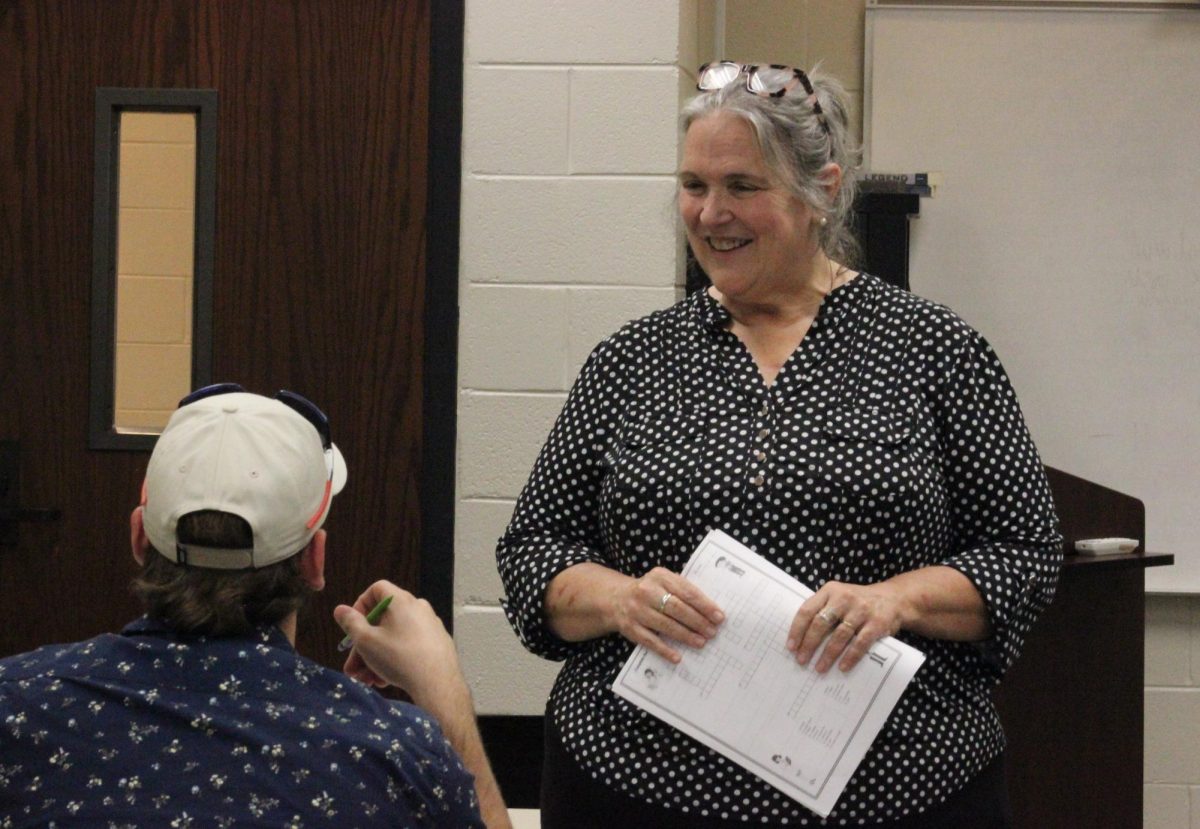
“I select the stories based on things that might connect with them and then help them connect,” Gillespie says. “It’s about making connections and wanting to talk in Spanish.”
As society grows increasingly divided by cultural and national differences, Gillespie implementation of storytelling acts as a bridge between her students’; and others’ realities by encouraging self-reflection.
“I think going deeper…going deeper into other people’s cultures and understanding and learning also helps you think about your own culture,” Gillespie shares. “It’s always a comparison culture, because a lot of us come from multiple cultures”
Gillespie pushes students to put this idea into practice by exposing them to foreign cinema. In the Cuban movie Viva Cuba, for example, her students confront its ambivalent ending.
“I do that on purpose too,” she laughs. “You have to kind of lay some—not every movie has a happy ending.”
Gillespie says open-ended endings in European and Latin America movies reflect broader cultural differences in storytelling.
“This one—There’s not a ta da,” Gillespie adds. “They got really mad—It was funny… like, yeah, this is culture.”
Culture, she says, is not merely historical; it is lives, performative experiences, and our daily human interaction.
“It’s not just history—it’s all kinds of culture,” Gillespie admits. “I think history is one way of looking at things, but we’re talking about dance, music, interactions beyond and including history.”
To close the gap between abstract academic concepts and genuine cultural experiences, Gillespie turns to videos, recognizing that stories are performative.
“With video[s] of people doing their own stories, you can be part of it—THAT, we couldn’t [do] before,” she explains. “They can be there for that festival where they’re playing their instruments and dancing and singing and celebrating…”
Gillespie’s drive to close the gap is not limited to distant cultures. She encourages her students to form connections between each other, recognizing each of them can bring something of value to the classroom.
“I really like it when things connect,” Gillespie shares. “Like, if you’re studying this, what can you bring in from your other classes?
She applies this mindset to her own research, too. Not long ago, she traveled to San Francisco to meet with art historians, archaeologists, and other historians to see whether there was a connection between what they had found in the ground and in Spanish and Native languages.
“There’s always new connections,” she says. “There’s always new ways to think of something and…I like to share that.”