










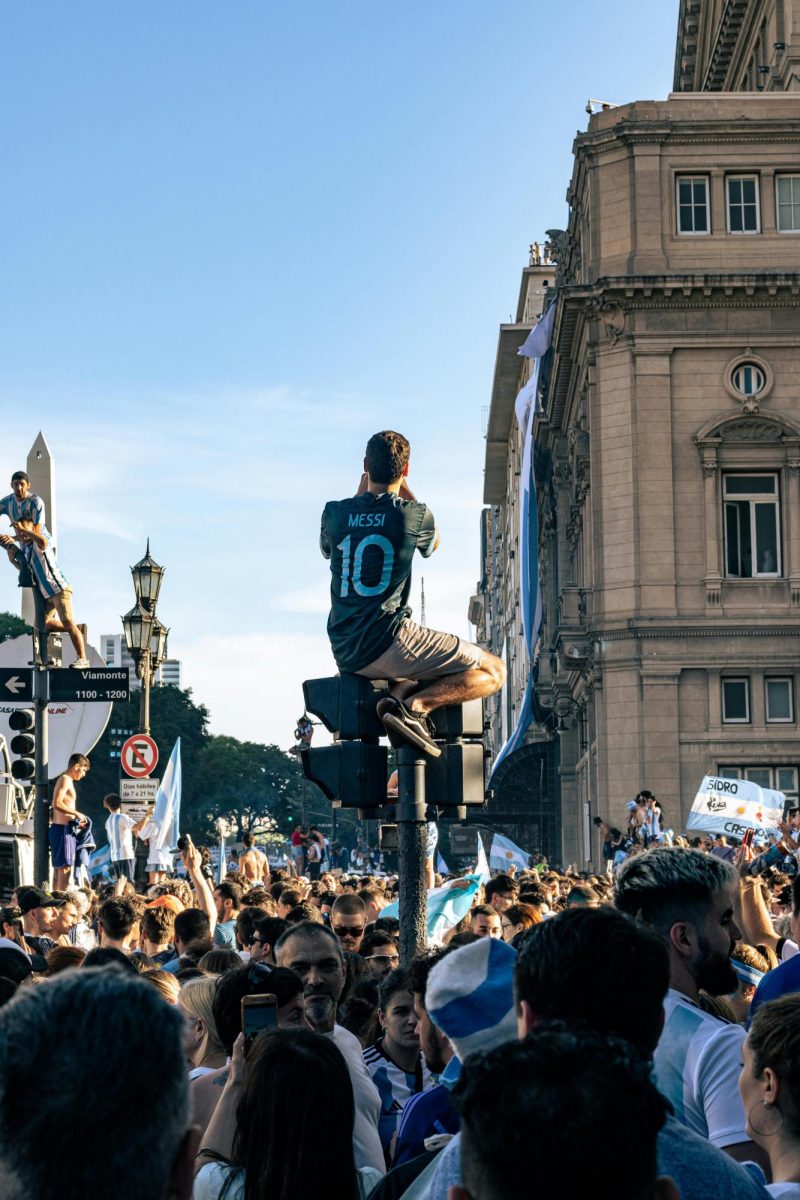
It was 2 in the morning, way past my bedtime, rain pouring outside, a generator was buzzing in the background, and almost everybody I knew from my neighborhood was sitting in this room, keenly watching a game they barely understood. Brazil was playing Germany in their home World Cup, in front of fans who desperately wanted their glory back. Most of us in that room were also supporting Brazil, only this was nearly 10,000 miles east of Brazil in Kathmandu, Nepal.
However, I was supporting Spain because they won the last World Cup. Well, that didn’t turn out as well as I expected, as they got thrashed out of the group stage. But that’s beside the point — the World Cup had an aura powerful enough that people with no electricity for 16 hours a day were running generators at midnight to watch players who weren’t even theirs.
But things have changed since. Mostly for the better, we’ve gotten rid of loadshedding, had a whole political revolution to overthrow the government, and I moved to a different country for higher studies. But I feel heavier than ever; maybe it’s because of the state of the world, or maybe it’s just what growing up looks like. Whatever the case may be, I desperately want to have that feeling I had that night. And with the World Cup coming back this summer, I have hope.
For the first time, it’s going to have 48 nations competing for that trophy. Many nations are featuring for the first time. I remember Panama playing their first World Cup in 2018. They were 6-0 down against England, and they looked beat up. That’s when they got a free kick and scored off of it. The whole stadium erupted. I had never seen something like that. I could see the emotions flowing. By the end of it, the scoreboard read 6-1, but the only goal I remember from that game is Panama’s.
The World Cup isn’t going to fix anything. It won’t stop wars, change governments or make people suddenly understand each other. The world will go on exactly as it has: messy, divided, unresolved. But what it does is pause time and gives people something to hold on to in an otherwise bleak world. So, when Curacao, with a combined population almost the same as the metro population of Hattiesburg, walks onto the Mercedes-Benz Stadium, the world will celebrate, and people will realize somewhere underneath this fractured world, there is still a place where all of us are one. That is the ideal world. The world we live in is going to cost you $150 for a round-trip 45-minute train ride to the stadium. But somewhere, a kid in Kathmandu is staying up past midnight for it anyway.