








For years, coaching was simple: you either knew the sport or you didn’t. The drills, the tactics, the plays—that technical knowledge was the credential. But as sports science has exploded over the past 50 years, coaching has evolved from intuition-based to evidence-based. That’s created a gap between what people think coaching requires and what it actually demands.
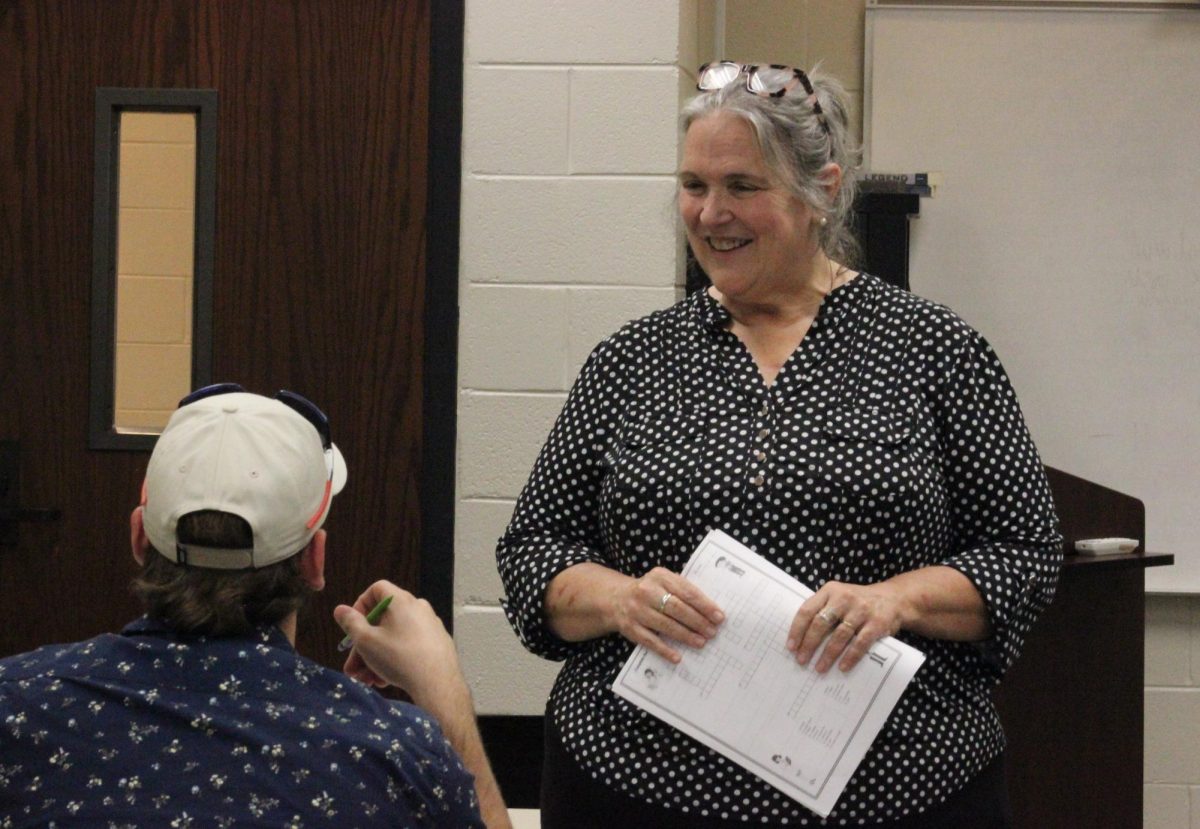
“A lot of times the pitfall there is that individuals are focusing on ‘the what’ to coach,” said Dr. Melissa Thompson, Executive Associate Dean and Professor in the College of Education and Human Sciences at USM. “So I know the skills and tactics of a sport, but not how to coach.”
A conventional coach might develop the perfect offensive scheme. But when it stops working, they don’t have the framework to diagnose whether the problem is tactical, physical or psychological – or how to adjust.
“Anybody can give you ‘the what’ to coach,” Thompson said. “And that’s not what this program is. It’s ‘the why’ you are making these decisions.”
USM’s sports coaching program, enrolling just over 100 undergraduate students, exists to fill that gap. The curriculum, accredited through the U.S. Center for Coaching Excellence, goes beyond sport-specific knowledge.
“Coaching is very, very complex,” Thompson emphasized. “It’s like a giant puzzle of all of these different elements of physiology, psychology, motor development and learning. And yes, I can Google a drill to run at a soccer practice and go do it. But if I don’t understand why I’m doing it, I might pick the wrong one.”
The program teaches students how to build relationships with athletes, teach skills effectively and deliver high-quality feedback—the invisible mechanics of coaching that don’t show up in drill videos.
At the core of the program is sport pedagogy—the science of how people learn physical skills. Students learn why certain teaching progressions work, how to break down complex movements, what makes feedback effective versus counterproductive. They record themselves coaching and receive faculty feedback on their techniques: cue words, prompts and demonstration clarity.
“Pedagogy remains the same across sports,” Thompson noted. “A coach who understands how to teach a skill in one sport can apply those principles to another.”
Students study exercise physiology, sports psychology, motor development, strength and conditioning science, and athlete safety. This scientific foundation separates educated coaches from those relying on instinct.
Thompson offered an example: A coach takes a sports psychology class and learns about athlete motivation. Later, they’re working with multiple athletes and notice different strategies work for different people.
“I have a foundation of knowledge that I can go back to and say, oh, I think I read something about this theory of motivation and maybe I should try this with this athlete,” Thompson explained.
The program is 100% online, but it requires students to create lesson plans, record themselves teaching skills to friends or family and submit videos for critique. Faculty assess not whether the drill is good, but whether the coaching techniques are effective.
“Coaching development is a blend of formal education and informal learning through experience,” Thompson said. “This program provides that formal foundation that coaches can build on throughout their careers.”
Students can take sport-specific courses tailored to what they want to coach while also learning broader skills that transfer across all sports. Most graduates enter coaching at the high school or entry-level collegiate level.
“When you ask them why they’re interested in coaching, they’re frequently saying things like, ‘I had a coach who really impacted me and I want to be that for somebody else,'” Thompson said.
While passion brings students into the field, the program also prepares them for the realities of coaching as a career including what the job market looks like.
According to the 2024 data from The Bureau of Labor Statistics, sports coaches and scouts earn a median of around $45,000 annually, though many positions are part-time stipends. Some pursue strength and conditioning certifications, where specialists earn approximately $58,000 median salary.
Coaching in the U.S. is currently unregulated—no license is required in most settings. National movements toward minimum standards are growing, and because USM’s program is accredited through the U.S. Center for Coaching Excellence, which also accredits national governing body requirements like USA Hockey’s fundamentals courses, it exceeds those minimum requirements.
The program gives students a framework for channeling that passion effectively, understanding how to structure learning environments, provide effective feedback and make evidence-based training decisions.
“They really want to make a difference in the lives of young people,” Thompson noted. “What better way to do that than to come and get the fundamental knowledge that you need to go out and make an impact like that?”
Students are learning the science that makes the passion effective.
“I would say it’s not purely an art,” Thompson said about whether coaching ability is innate. “And I think when you ask high level coaches, they would say that it’s really a blend of art and science.”
The science involves understanding how the body functions during exercise and adapts to training, while the art centers on communication, relationship-building, self-analysis and reflection.
“The ‘Art’ is how you do all those things and how you continue to evolve and change over time,” she said. “But I think you do that through an understanding of science.”
Coaching hasn’t abandoned intuition entirely. The art of reading a room, building relationships, knowing when to push or back off still matter. But that art now operates on a foundation of science: understanding how bodies adapt to training, how skills are learned, how motivation works.
“This program really gives the foundation of information for coaches as they continue to develop over time to anchor their experiences back to that information,” Thompson explained. “It’s not required to go do this work. But it helps you evolve and succeed over time.”