

















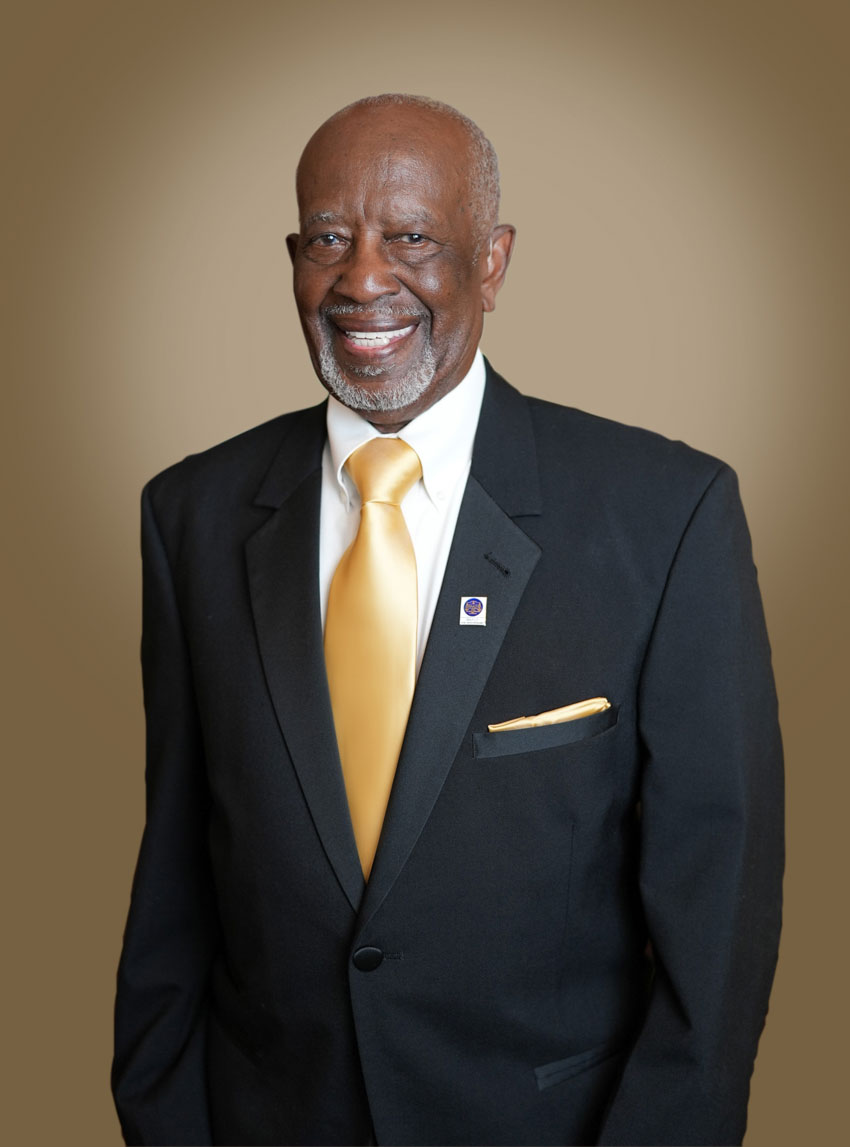
Born into the rural farmland of Columbia, Mississippi, Clarence Magee’s earliest memories are rooted in faith and discipline. The son of sharecroppers, Magee grew up helping his family harvest cotton, tend livestock and haul water from a spring for cooking and drinking. Life was demanding, but he credits those experiences with shaping the man he would become.
“We had a real hard life,” Magee said. “But it made me who I am today.”
Magee’s parents and grandparents, though unable to read or write, instilled in him the importance of education and service. His father, determined to break the cycle of limited opportunity, made a vow that his children would attend college. That promise became reality. Magee and his siblings went on to become educators, lawyers and community leaders, an extraordinary outcome for a family rooted in poverty.
Growing up in the segregated South, Magee became aware at an early age that Black Americans were treated differently. He observed the way his parents navigated public spaces cautiously and respectfully, understanding the unspoken boundaries that defined daily life. One moment left a lasting impression: while accompanying his father to work in the fields, a white landowner’s wife suggested Magee was old enough to plow. His father, determined to protect his son from the same life of forced labor, vowed Magee would never plow another man’s land.
“That made him go out and find land of his own,” Magee said. “He wanted something different for his children.”
After serving two years in the U.S. military, including time stationed in Germany, Magee returned to Mississippi eager to exercise his rights as a citizen. Owning property and paying taxes qualified him to register to vote, but local officials repeatedly denied him. Each year, he paid the required poll tax and took the voter registration test, only to be rejected.
“I took the test five times,” Magee recalled. “They would look at it and say, ‘Not quite satisfactory,’ without even reading it.”
Magee and his wife became central figures in a landmark federal voting rights case that challenged discriminatory registration practices in Mississippi. His wife submitted a flawless application but was still denied, while white applicants with incomplete or illiterate submissions were approved. Their testimony helped expose systemic discrimination and contributed to expanding voting access for Black citizens across the region.
“It wasn’t just for us,” Magee said. “We wanted to make sure our children would never have to go through what we went through.”
The fight for equality came with risks. Magee faced intimidation, harassment and threatening phone calls during the legal battle. On one occasion, he was followed by men in a pickup truck after leaving the courthouse. Despite the fear, he remained committed to the cause.
“They wanted to frighten you and make you stop,” he said. “But we had enough courage to keep moving forward.”
Throughout his life, Magee remained active in his community, working alongside church leaders, educators and civil rights advocates. He taught school, worked for the federal government for more than two decades and mentored younger generations. He emphasized discipline, financial responsibility and education—values he learned while picking cotton for one cent per pound as a boy.
Today, at 93 years old, Magee reflects on decades of social change with both pride and concern. He witnessed the assassinations of civil rights leaders like Medgar Evers and Martin Luther King Jr., and he participated in the struggle that led to the Voting Rights Act of 1965. Yet he worries that younger generations may take those freedoms for granted.
“I struggle with the idea that people have the opportunity to vote and don’t take advantage of it,” he said.
Magee continues to share his story, hoping it will inspire others to remain engaged and determined. He believes progress requires persistence, courage and unity.
“If you can’t fly, run. If you can’t run, walk. If you can’t walk, crawl,” Magee said. “By all means, keep moving.”
For Magee, the lessons of the past remain clear: change is possible, but only if people are willing to work for it and remember the sacrifices that made it possible.
Hubbard Shirley | Mar 25, 2026 at 11:27 am
Thank you for your persistence we’re grateful and thankful for you, Mr. Magee, Cousin, Uncle, father and leader you are keeping the dream alive, you have and is living it.continue to open doors push past the denials. Blessings to you forever.
Jacqueline Jones | Mar 18, 2026 at 10:05 am
Thought provoking!
I am thankful to have learned if the incredible contribution to humanity if Dr and Mrs Magee and their family.
So many have fought this fight. To be able to read the saga is a blessing!
Mavis A. Creagh | Feb 28, 2026 at 9:41 am
Thank you so much Dr. Clarence Magee and Mrs. Magee for all of your sacrifice and service. We are forever grateful.