







Just outside my mother’s living room sits a cabinet that feels increasingly out of place in 2026. There stands a dense archive of DVDs and aging video games; their plastic cases worn from years of use, lying on top of one another. It’s the kind of collection that once defined a household’s entertainment habits, now gathering dust in the age of instant streaming.
Recently, I asked her why she has an analog collection of movies and games, especially ones that are easily accessible online.
She responded jokingly, “What if we get bored during the apocalypse and all of online is gone?”
Archiving physical media has always been a thing, although I believe the true reason my mom kept these disks for so long is because of the amount of money she spent purchasing them, but the rhetoric of being afraid that the things you own digitally can just disappear instantly is not at all far from the truth.
The phrase “You’ll own nothing and be happy” is often linked to the World Economic Forum and is based on a 2016 essay by Danish politician Ida Auken.
It envisions a potential future often linked to the 2030 Agenda, suggesting a shift toward a service-based economy where goods are rented or accessed rather than owned.
“When products are turned into services, no one has an interest in things with a short life span,” Auken says in her essay.
Today, many Americans are no longer buying physical media. According to Cord Cutters News, total revenue for disc sales in 2024 dropped 93.75% from its peak in 2005. Over the past decade, physical sales have collapsed while subscription-based streaming has surged.
Services built on access rather than ownership now dominate, with roughly one-third of U.S. households paying for at least one streaming platform.
Other media see similar trends too: Digital music sales surpassed physical ones in 2011, only for streaming to overtake digital purchases five years later. By 2020, digital video games outpaced their physical counterpart with gaming subscriptions seeing a rise as well. Even traditionally tangible markets like art have begun experimenting with ownership untethered from physical form, as seen in the rise of NFTs.
However, it’s worth calling these services what they actually are: subscriptions. Streaming doesn’t grant ownership; it sells temporary access—access that can be altered, reduced, or revoked entirely at any moment, far beyond the customer’s control.
The library you pay for is not fixed but is shaped by licensing deals and corporate priorities rather than personal choice.
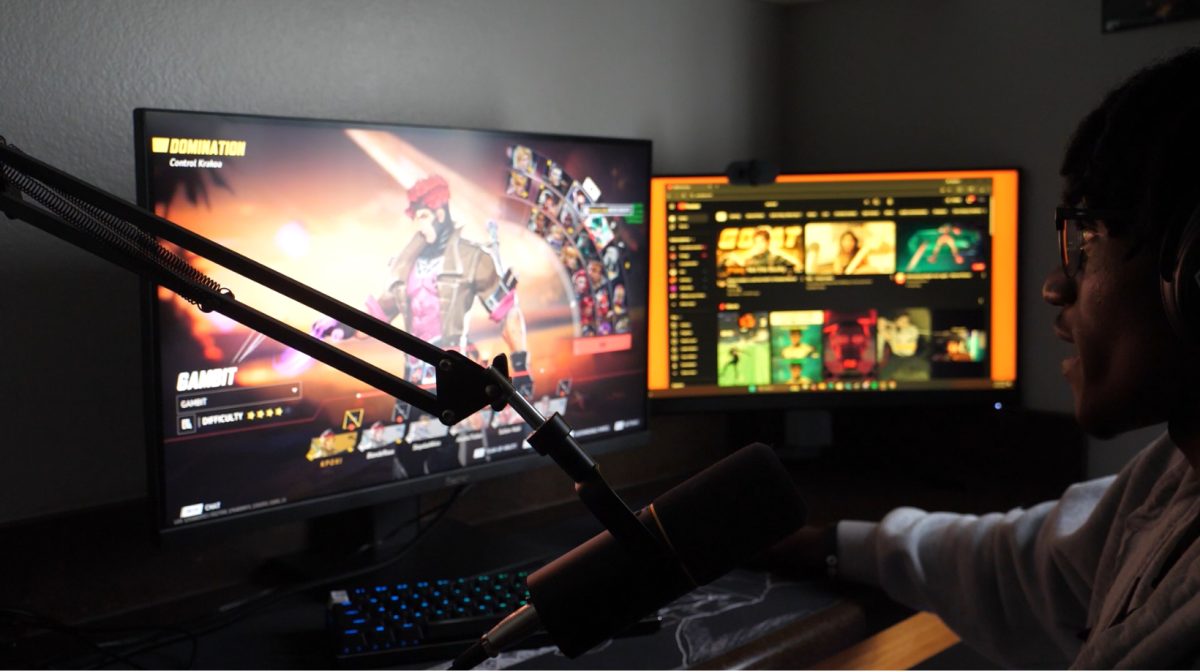
As a result, consumers are beginning to question the reality of digital ownership. One movement addressing this issue is the Stop Killing Games initiative, a consumer-led effort challenging the legality of publishers rendering purchased video games unplayable.
At the heart of the movement is a simple concern: video games are sold as products, yet many are designed to become completely unusable once publishers shut down their servers.
Over the past year, the movement has escalated complaints to consumer protection agencies in countries such as France, Germany, and Australia, while also petitioning for new legislation.
Ross Scott, the movement’s founder, highlights what he sees as a fundamental flaw in the industry.
“This will be illegal in other industries,” said Scott. “When you buy something, you get to keep it. If you buy a music CD as long as you keep it in shape, you can play it indefinitely.”
He explains that publishers are often making already purchased games impossible to use.
“The games are perfectly capable of working on, but the publishers are essentially building in kill switches once they’re done supporting it. They’re making it almost impossible to use that game,” he said.
When discussing ownership in the digital age, a term worth noting is techno-feudalism, coined by Greek economist Yanis Varoufakis in his book “Techno-Feudalism: What Killed Capitalism.”
He argues that modern economies are shifting away from traditional capitalism and towards a system where large tech platforms exert control more like feudal lords.
Under capitalism, consumers buy goods and own them outright, and companies compete for those purchases. But under this emerging model, ownership is replaced with access, and access is controlled by a small number of dominant platforms.
Instead of buying products, users enter ecosystems—closed systems where corporations dictate the terms of use, availability, and longevity of what is consumed.
This shift is especially visible in services like Amazon. When a user purchases an e-book through Kindle, they are not truly buying a permanent copy, but a license that can be modified or revoked. Changes to policies like limiting downloads or altering access highlight how little control users actually have over the things they pay for.
In this sense, consumers begin to resemble tenants rather than owners. They pay for access to digital land—libraries of media, games, or books—but ultimately have no authority over it. The platform retains full control, deciding what remains available and for how long.
However, this comparison is not without its critics. Unlike historical serfs, modern consumers can choose between platforms or opt out entirely. Yet as digital ecosystems become more centralized and essential, freedom becomes increasingly limited in practice.
Scott argues that these models fundamentally contradict traditional ideas of ownership.
“You almost have to go back to feudalism,” said Scott. “Where you don’t own it, and you’re not really renting it because you don’t have the protection of how long you get to retain it’s just totally up to the rights holder, and you’re just allowed to use it for a certain amount of time that is also up to them.”
But preservation for media isn’t over yet; some individuals are still finding ways to engage with media in more tangible forms.
Vinyl is one medium that has proven beneficial in the fight for preservation.
Vinyl sales have increased by 18% annually over the past five years, with about 60% of Gen Z contributing to this trend, according to a Future Consulting Audio Tech Lifestyles report.
Christian Gray, a new vinyl collector, talked about why he started to start to collect.
“I just like the idea of preserving music and analog style,” said Gray. “You never know what’s going to happen in the future; you don’t know if we’re going to continue to have streaming digitally like Apple Music or Spotify, so just having my music on vinyl ensures I can listen to my favorite artist.”
Convenience often comes at the cost of control. What we gain in accessibility, we risk losing in autonomy.
The question is no longer just how we consume media, but whether we truly possess any of it at all.
So maybe the concern isn’t about an apocalypse in the traditional sense. Maybe it’s about ownership eroding gradually, replaced by systems that prioritize access over permanence and profit over preservation.
And when that happens, the things we thought we owned won’t vanish all at once.
They’ll simply stop being ours.