















Mississippi currently ranks seventh in the United States for income inequality. For every dollar a man makes, a woman working full-time makes 75 cents.
According to the National Women’s Law Center, this pay gap varies even more for different races. For Asian women, the same pay gap is 69 cents, for Black women it is 58 cents and for Latina women it is 54 cents.
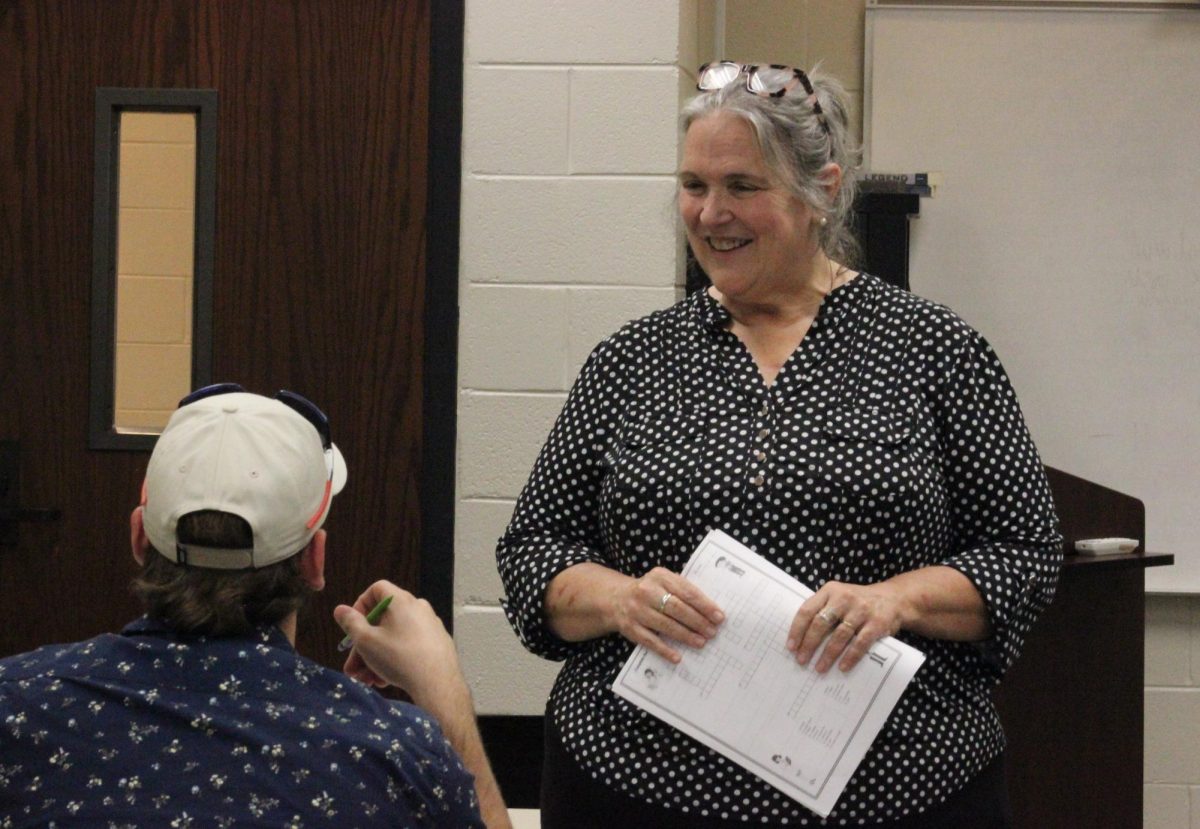
Laura Mammina is an Assistant Professor of History at the University of Southern Mississippi. She studies race, ethnicity, gender and sexuality in the United States. She said that one of the factors that leads to this pay gap is the jobs that people held in the past.
“Initially, women were paid well, but they were in industries where there were no men. At the time, it was considered inappropriate for men and women to work together. As manufacturing increased in the United States, employers realised they could hire women and children, particularly that their smaller hands were better for some machines, and they could justify paying women and children less than men,” said Mammina.
“They said that women were not as strong and they couldn’t work as hard as the men. They also said that women were not supporting families,” she said.
Although most of these things were not true, men used these reasons to pay women lower wages. As time went on, women started to enter professions like doctors, nurses, teacher and even lawyers. For many jobs, as more women start to enter them, they would be considered feminized.
“That is a further justification to pay people lower for doing those sorts of jobs. We saw this happening with teaching, that was a male profession, and then it generally became one in which women do, and the wages are low, and also in nursing,” she said.
In Mississippi, slavery formed the basis of the economy before the Civil War. After the Civil War, a large portion of the African American workforce was forced into labor contracts and didn’t make a lot of money. Specifically for Black men and women, certain jobs are designated for Black men and Black women. Historically, Black men have done agricultural labor, and Black women have done domestic work.
“Those are jobs that have been very difficult to unionize, where people could kind of get together and advocate for better wages. And they also have been jobs that have been left out of federal government programs that would give and enable people to advocate for either better pay or be eligible for retirement,” said Mammina.
Another factor that contributes to the pay gap is wage disparities between what people at the top of a company are making and what an entry-level worker makes. There is a significant increase in the gap between them.
“Between 1979 to 2016, while productivity increased by about 64 percent, hourly compensation only grew 11 percent,” she said.
Workers are creating more wealth, but they aren’t seeing their wages increase. People are not being compensated for the work they’re doing, and hourly wages are not keeping up with inflation.
It is illegal in the United States to pay someone more or less based on their race, gender or sexuality. But just because this is illegal, it doesn’t mean it doesn’t happen.
In the workforce, employees don’t always talk about their salary, and employers usually discourage them from doing so, so it’s hard to know what pay disparities might be present.
Mississippi has historically been anti-union and against raising the minimum wage. The federal minimum wage is $7.25, and it has been that way since 2009.
Some ways that people can advocate for change are to start conversations with co-workers about their pay and advocate for themselves if they see unfairness. If someone notices they are more qualified, yet being paid less than someone who’s not, they should ask for more.
“Another thing that you can do, and this can be difficult in Mississippi, is to join unions. I will plug the United Campus Workers. I am a member of this union, and if someone is a student worker at the University of Southern Mississippi, they can join that union,” she said.
The union requires the members to pay dues, and in return, it provides benefits. The union advocates for ending the pay gap and limiting wage disparities in the US. To join the United Campus Workers for Mississippi, visit ucwms.org/join.