



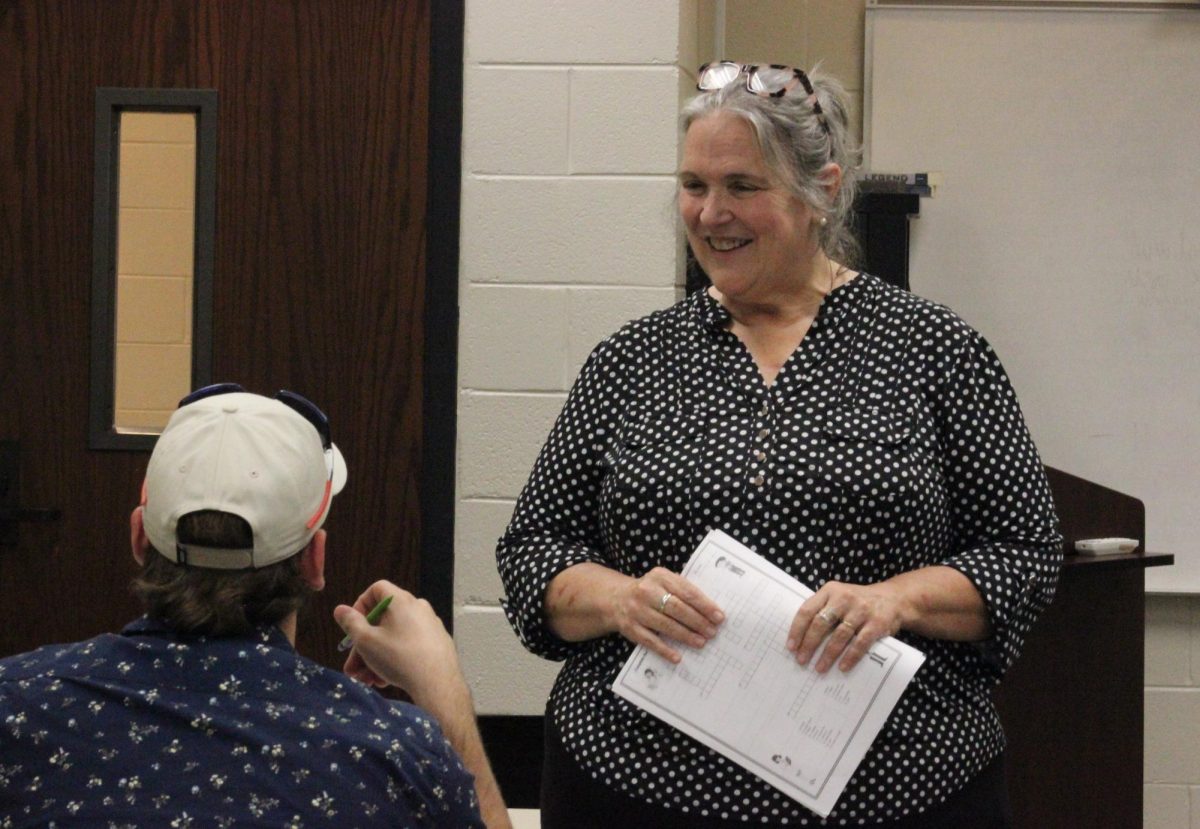















“I couldn’t attend classes, meetings,” Ph.D. student Khadiza Akter said, voice cracking slightly as she recalled faculty emails asking why she was absent. “I couldn’t explain them.”
Untreated reproductive health problems had derailed her academic responsibilities at the University of Southern Mississippi, but cultural stigma silenced her.
“I belong to [a] really conservative society,” Akter said. “In that society back in Bangladesh, it was taboo to speak about your gynecological health issues.”
That silence crushed her mental health.
“I felt depressed, I felt stressful because I didn’t understand what went on in my classes,” she confessed.
Witnessing how her own reproductive health struggles mirrored those of countless minority women, fueling depression and anxiety, Akter decided to fill the gap others missed.
“Some other studies already found the correlation of gynecological health problems and mental health outcomes,” she said. “But, they didn’t focus on minority women. They didn’t measure the differences—so, I did this in my study.”
Akter surveyed 138 women diagnosed with gynecological issues, comparing Black, Asian, Hispanic and White women on daily fibroid pain, endometriosis suffering, doctor satisfaction and depression/anxiety levels. Black women reported worse pain from uterine tumors and womb tissue growth, felt less satisfaction with doctors and experienced higher anxiety—revealing clear healthcare disparities.
However, Akter admits her study has limitations: too few Asian, Native and Hispanic women responded, self-reports can exaggerate links, and the doctor-trust measure wasn’t comprehensive enough. Despite these limits, her rigorous research still won the Peggy Jean Connor Research Award from USM’s Center for the Study of Race and Women.
Sunny Wells, CSRW member and award subcommittee chair, explained why Akter stood out among four competitors.
“She was particularly clear… methodology, very detailed… great research to back it up,” Wells said.
Wells stated that Akter’s research is especially important to Mississippi’s reproductive health crisis.
“It was about women’s health—that’s been a very important concern, particularly in Mississippi, where women’s care—and particularly women of color’s care—is…,” Wells paused. “Our rates in terms of maternal deaths after birth are really high.”
Akter’s gynecological research addresses these same racial gaps by also taking into account the systemic issues behind racial disparities in minority women’s gynecological health.
“You have to figure out structural barriers or systematic issues,” Akter said. “Then, you have to give importance [to] how this affects your mental health.”
Research showed Akter that Black women get uterine tumors more, survive cancer less and wait longer to learn they have uterine tissue growing in the wrong places. This made Akter think about women without health insurance.
“That makes me feel sad for other women. I am aware about my health. But think about [those] who had [a] lack of health literacy,” Akter explained. “Some women from poverty cannot afford their treatment. And that always made me sad.”
“And my story makes me sad,” she continued.
“I couldn’t attend my meetings and [the] professor emailed me—they complained [to] me ‘you missed the meeting every week on Friday,’” Akter shared. “But I couldn’t explain, ‘hey, this is my problem’. And I had to suffer [for] at least three days. Can you imagine suffering three days a week with this problem?”
Her advisor, Tammy Greer, sees Akter turning that personal pain into public solutions.
“She’s in a perfect place to do it because she can go and splay it out at a conference and let people see that this is okay to talk about,” Greer said. “This is not something you need to turn into despair. This is something we need to figure out.”
Greer sees Akter as being the one to spark those solutions.
“Once we start talking about it, then solutions can come…it’s solvable,” she continued. “The government can have an intervention that says… these things need to be tended to for women earlier than they are right now, because by the time we’re catching them, they’re a problem already.”
To raise awareness, Akter presented at the Southeastern Psychological Association conference in New Orleans on March 27, focusing on gynecological health disparities among minority women.
She aims for dual impact.
“I want to contribute in two ways: one is raising awareness, another is to contribute in [the] scientific community,” Akter said. “I want to make aware to the women, policymakers and those who are the healthcare service providers …”
That urgency, she says, comes from a simple but powerful fact: globally, half of the population is women.
“If you keep your half of the population like under-diagnosed, undertreated…” Akter continued. “How can you build a healthy nation? How can you build a healthy world? So you have to be careful. You have to be aware of their issues.”