













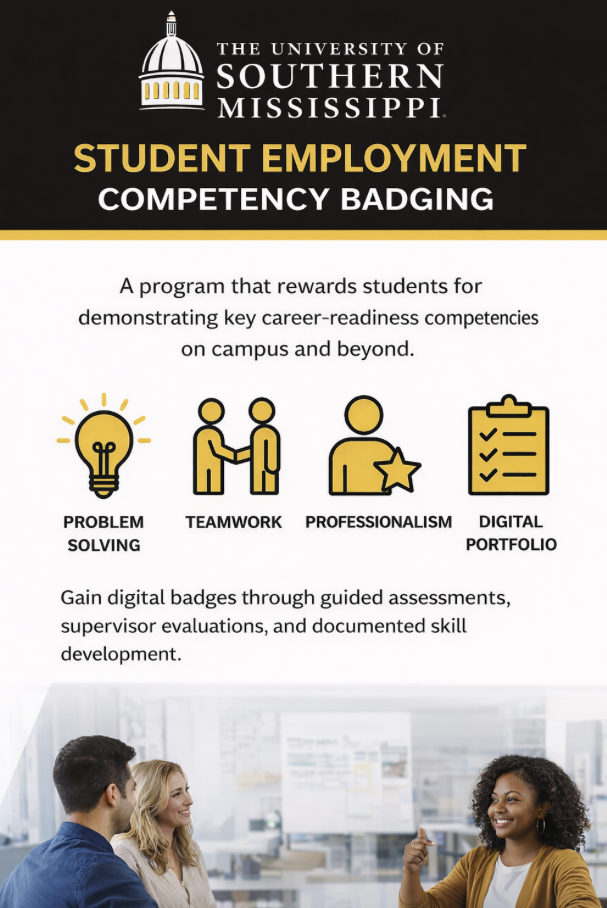
The University of Southern Mississippi has launched the Student Employment Competency Badge Initiative, a 10-week online program designed to help student workers develop professional skills and earn credentials that could enhance their career prospects after graduation.
The program is open to students employed both on and off campus. While it does not offer college credit, the course provides valuable training for today’s competitive job market.
Once students complete the program, they earn a digital badge that can be added to their résumé and LinkedIn profile. The badge signals to future employers that students have developed key workplace skills that go beyond academics.
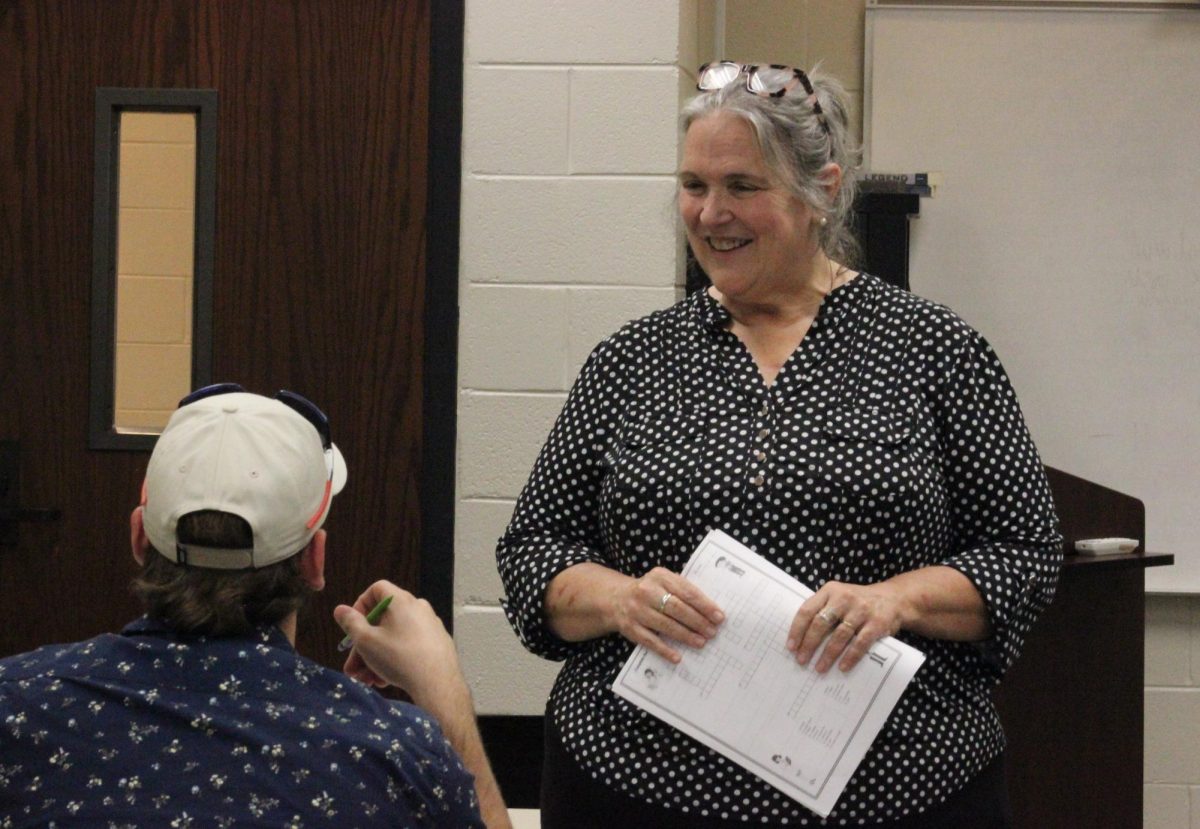
The initiative was created by Akim Gilliam, the job location and development coordinator for USM Career Services, who saw a clear need to bridge the gap between classroom learning and professional readiness.
Gilliam explained that the program focuses on building competencies in three major areas: problem solving, professionalism and teamwork. While the National Association of Colleges and Employers outlines eight total career readiness competencies, Gilliam intentionally chose to start small.
“This is just a pilot course,” he said, noting that additional competencies will be added in future semesters.
His goal was to design something that was meaningful without being overwhelming for students or supervisors.
The course is structured like a typical online class, complete with modules and assignments. Students participate in discussion questions that connect what they are learning to their current jobs, reflect on their experiences as student employees and complete detailed case scenarios. These scenarios require students to think critically and apply real-world examples, rather than offering short or surface-level responses.
Gilliam said the idea for the program began last spring after repeatedly reading articles from NACE that discussed employer concerns about Generation Z entering the workforce. Company leaders, he explained, often claim that young professionals are not fully prepared for workplace expectations. As someone whose role centers on job development, Gilliam felt that responsibility fell partly on him. He began researching how other universities approached badging programs but found many to be overly complex or time-consuming.
“I specifically designed this course not to be complex,” Gilliam said. “Not easy, but not challenging either.”
He wanted to respect students’ schedules and supervisors’ workloads while still encouraging thoughtful engagement. The result is a program that balances accessibility with substance.
The initiative also ties into USM’s Student Employee of the Year awards. Participation in the course is now required for nomination, making the program a stepping stone for recognition as well as professional growth.
Supervisors play a supporting role by monitoring student progress and using rubrics to evaluate final assignments. Gilliam and his team then review the materials and determine badge eligibility. According to Gilliam, students who put in the effort should have no problem earning a badge.
Gilliam believes the badges themselves are powerful tools, especially for today’s students. While badging faded for a period of time, he says it is making a comeback, particularly with a generation that values credentials and digital visibility. He explained that when employers see a badge on a résumé or LinkedIn profile, it naturally opens the door for conversation. Students are then able to clearly explain how they demonstrated professionalism, teamwork, and problem-solving skills—qualities employers consistently look for.
“Getting a job is a competition,” Gilliam said plainly.
He emphasized that the more credentials students have, the better they are able to sell themselves and stand out among other candidates. This is especially important for students outside of high-demand fields like STEM, where competition can be intense.
Gilliam also pushed back against the idea that professionalism is difficult to learn. He described it as showing up on time, being mindful of coworkers and supervisors, taking initiative, and wanting to improve as a person. While these may sound simple, he noted that many young workers still need guidance. “We as professionals have a duty to teach you how to be a professional,” he said, adding that the responsibility does not rest solely on students.
Despite the course not offering academic credit, Gilliam encourages students to see the bigger picture. College, he said, is only the beginning. Once students graduate, they immediately enter a highly competitive job market where credentials, experiences, and involvement often make the difference. “Student employment competency badges—they’re silent, but somehow they speak,” Gilliam said.
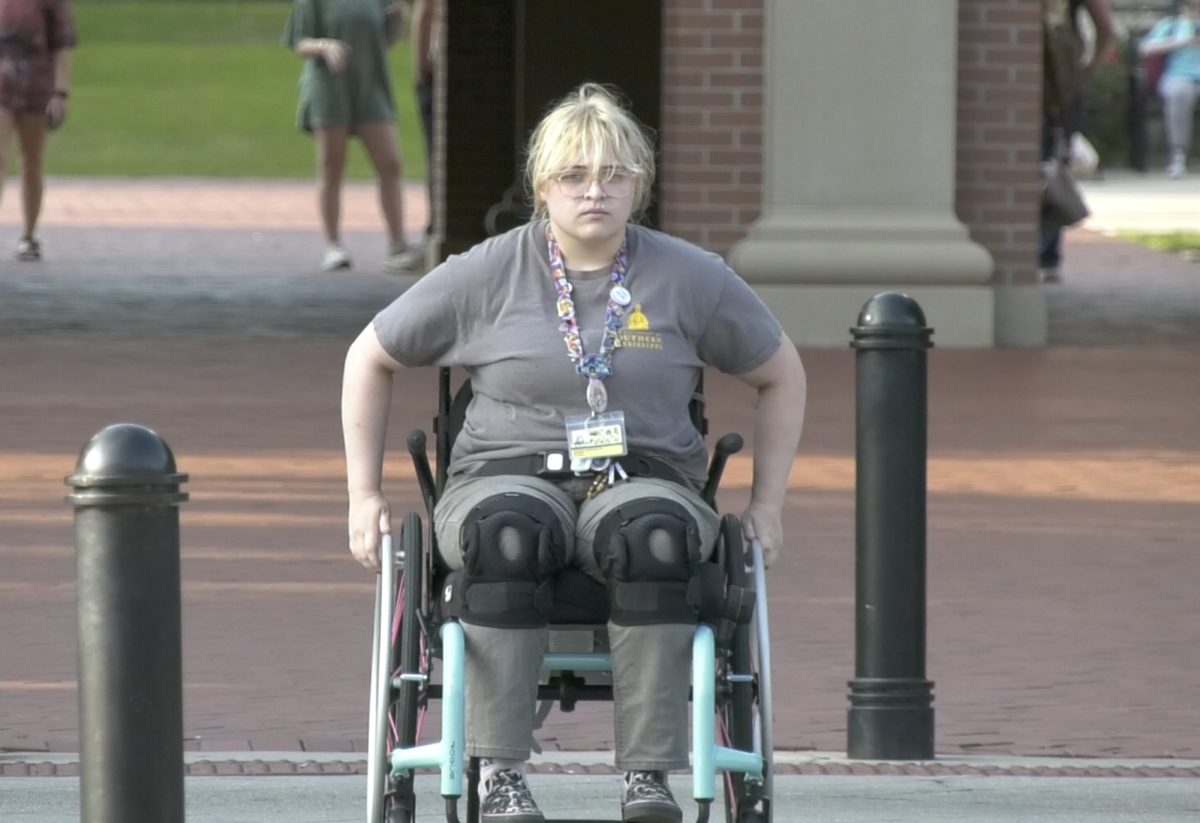
Student employees are already responding positively to the initiative. Emily Blue, a USM student worker, shared her enthusiasm for the program.
“So I’m actually really excited about this opportunity,” she said. “I love getting any opportunities from the school to enhance my resumeésé, enhance my LinkedIn and make myself look more marketable for any future job opportunities. So I personally am really excited for this.”
As the program continues to roll out, Gilliam is meeting with supervisors and students to build awareness and participation. While progress may be slower than he would like, interest is growing. With plans to expand the program and make it more interactive in the future, the Student Employment Competency Badge Initiative represents a forward-thinking step in helping USM students graduate not only academically prepared, but professionally ready as well.