













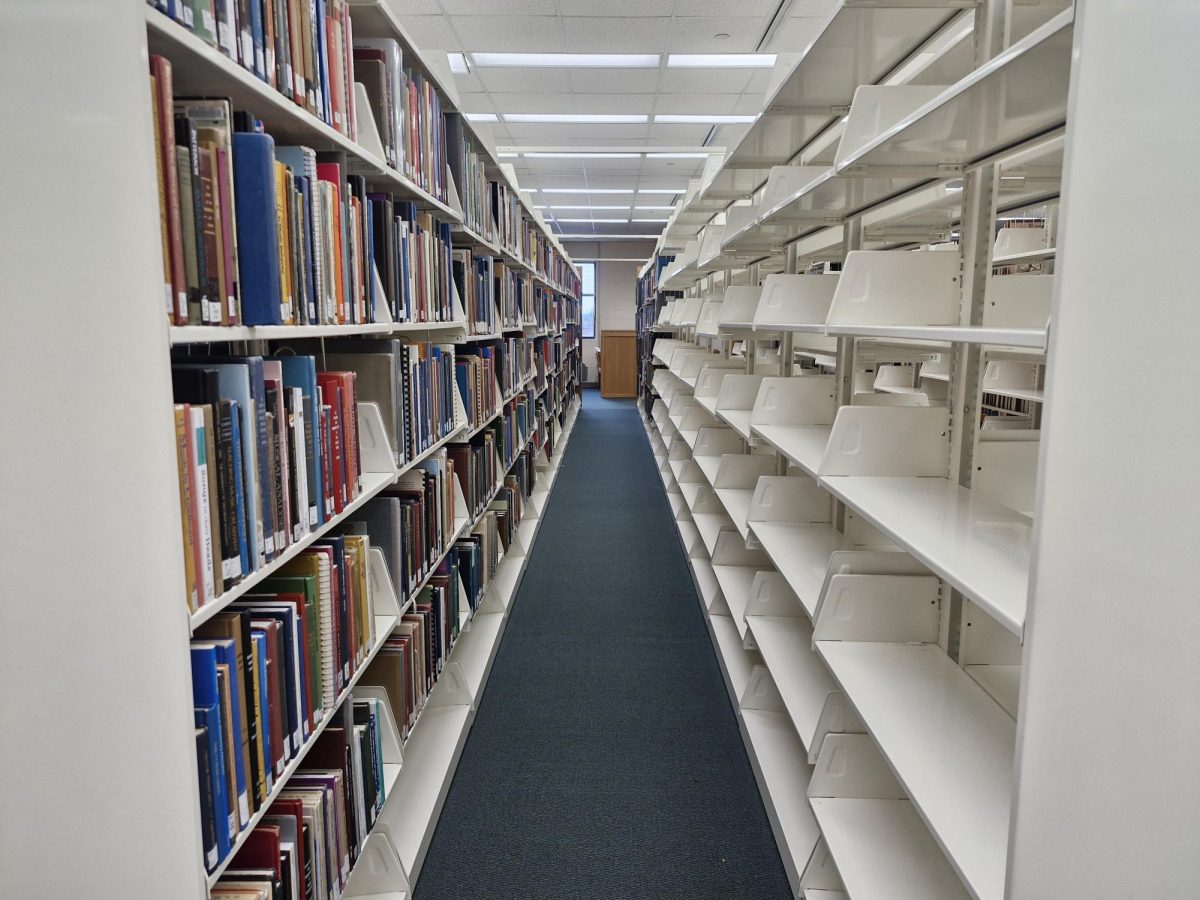
Across the United States, physical book checkouts at university libraries are declining sharply as students are turning to digital resources. A 2023 Association of College and Research Libraries report suggests that physical media now account for just 1.6% of total library usage, with digital resources making up the rest.
At the University of Southern Mississippi, the trend is no different. Fewer students are using physical materials, and the shift has reshaped how library spaces are used. According to Dr. John Eye, dean of University Libraries, students are using physical books less largely because most academic materials are now available digitally.
“Most of the journals and many of our books are electronic now,” Eye said. “What you see physically in the building are people that are either trying to find something that isn’t in electronic format, or they’re browsing the shelves, looking for ideas.”
This digitalization has reduced the need for print collections. This is particularly relevant among students in science-based disciplines, who rely heavily on electronic journals, e-books, and databases. Humanities students, including those majoring in history and English, remain among the primary users of print collections.
“There is a trend depending on the discipline and what resources a student uses,” Eye said.
Declining print use has prompted the library to rethink how its physical spaces are utilized. In 2021, Cook Library renovated its first and second floors, removing many reference materials and bookshelves to create more open study spaces for students.
“It’s an incremental process of moving toward more student-friendly, inviting spaces,” Eye said.
The library approaches its operations like a business. They regularly evaluate how its spaces and resources are used. Eye said the goal is to attract more students and community members by offering flexible, welcoming environments. Maintaining both physical and digital resources requires recurring investment. So, the library continually assesses which materials are being used and which are not, cutting back in some areas while expanding others. Despite these efforts, Eye said many of the library’s resources remain underutilized.
Eye attributed the underuse to two main factors. The first is outreach. Despite ongoing efforts through emails, programming, partnerships, and events, he said making students aware of all the library’s services remains a challenge.
“We’re never going to get to the point where 100 percent of our students know everything that we have,” Eye said.
The second factor is the difficulty of measuring digital use. Unlike physical checkouts, online engagements do not have a metric to quantify and track the usage.
“When you access a database article, when you download it to your computer, is that considered a use? Or when you see it on the screen, is that considered a use?” Eye said.
For students, the library continues to play an important role. Sujal Maharjan, a sophomore majoring in computer engineering, said he visits the library regularly and uses services like printers, study spaces, and the writing and speaking centers.
“I haven’t used books much, but I’ve used online resources for some of my courses,” he said. “It (Library) is pretty big for my academic growth, and I always go there whenever I need a quiet space or I need to focus.”
The digitalization is transforming the library from a storage space for books to a place for studying and socializing.
“We consider ourselves a ‘den’ for our students,” Eye said. “A place where people can come in and use it in a lot of different ways.”
However, some collections remain entirely physical and serve specialized purposes. The De Grummond Children’s Literature Collection, for example, is a research archive that supports scholars studying children’s literature.
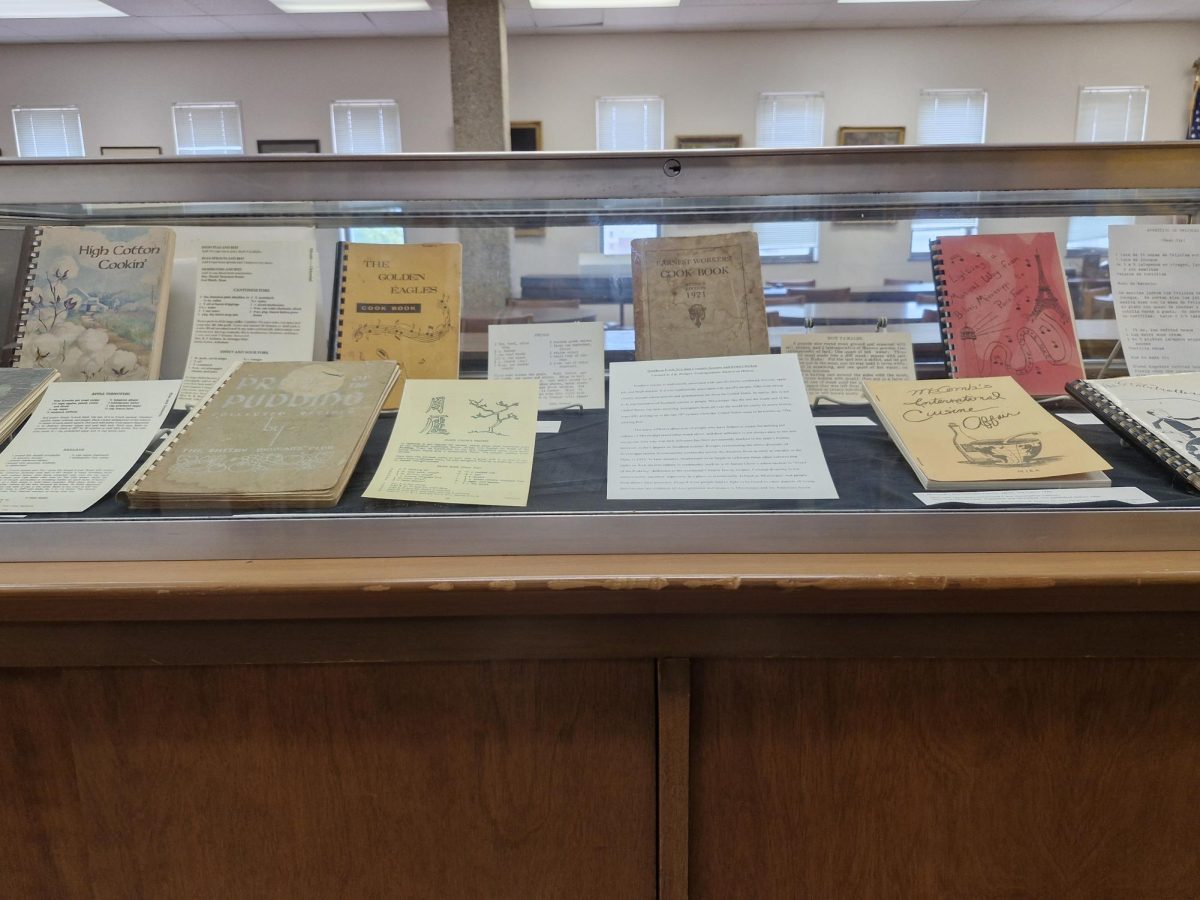
McCain Library is also undergoing renovations to make archival materials more visible and accessible, including new exhibition spaces on the ground floor.