













A report from Minderoo Centre for Technology and Democracy at the University of Cambridge found that 51% of the writers believe their role will eventually be replaced by Artificial Intelligence.
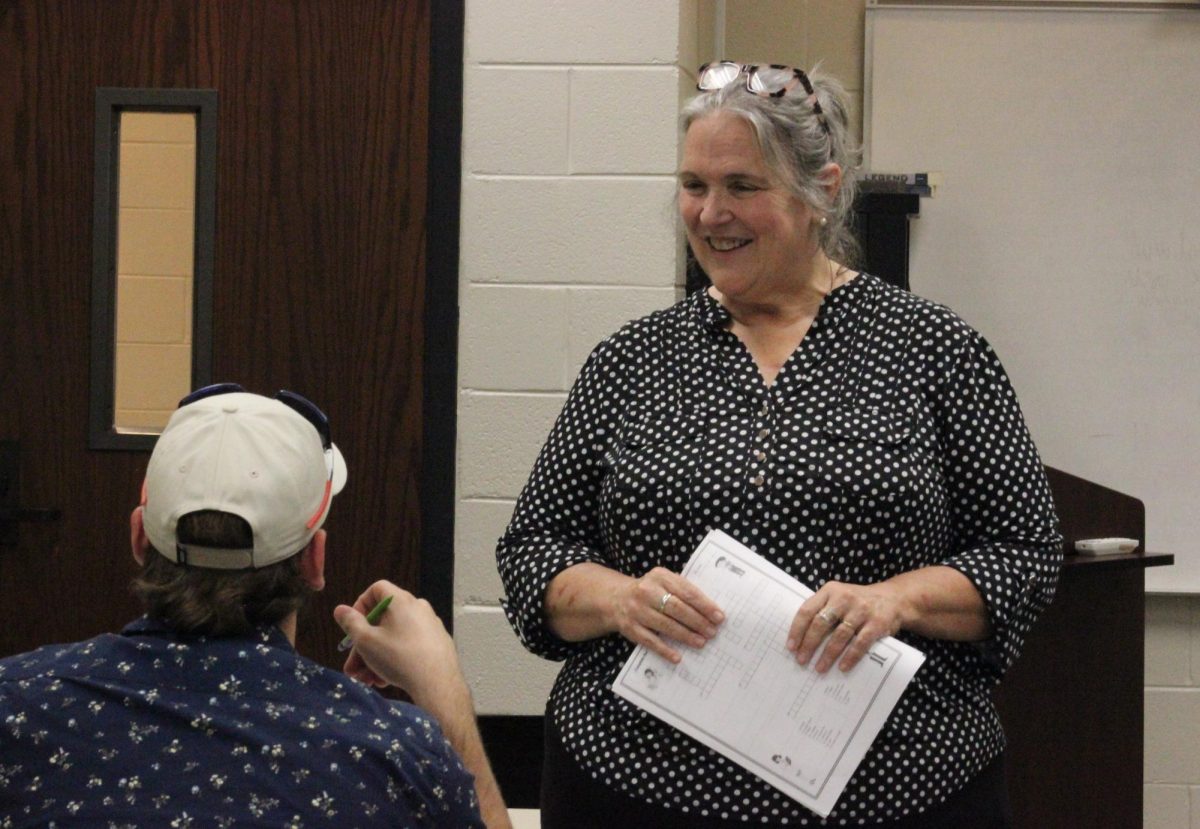
Dr. Erika Luckert, Director of Composition in the School of Humanities at the University of Southern Mississippi and a published author, believes AI, like in any other field, has an impact on writing as well.
“I think about how formative AI is going to be in their (college students’) literacy development and their development as writers,” Luckert said.
The use of AI among the current writers, however, has been minimal. The MCTD report also suggests 67% of UK writers say they do not use Artificial Intelligence in any form. However, they acknowledge AI has some positives, with 80% agreeing that it benefits some parts of society.
Luckert doesn’t see much use of AI in her writing process, other than generating descriptions for images in a presentation or transcription.
“Because I’ve been a writer for so many years now without AI tools on the table, I already have so many different technologies that I use in my writing process and a really refined writing process that AI has not felt very appealing to me,” she said.
This reluctance among writers to use generative AI tools stems from the uncertainty around what AI companies are doing with user data.
“I was working on the final stages of revision of an article, and I knew that I needed to cut about another 200 words. And so I had a moment where I was like, ‘I wonder if this would be a good opportunity to test and see what AI can do,” said Luckert. “But then I thought, ‘I don’t know, I haven’t had the time to do the research about what I’m giving it access to or what it can do with whatever I paste in.’ And so I did the much more laborious process of cutting the words myself.”
AI companies typically rely on large amounts of data, including written works, to train their AI models, a process that has drawn criticism from writers. Many argue their works are being used without their consent or compensation. This has led to several lawsuits against AI companies such as OpenAI and Anthropic. In September 2025, Anthropic agreed to a $1.5 billion settlement to resolve a class-action lawsuit brought by authors over the use of pirated books for training its Claude AI.
There is also an ongoing debate among writers about the novelty of AI-generated content. Luckert believes creative writing is a form of thinking, and it’s an experience and not just getting words on paper.
“AI does very well already and writes very smooth text, very grammatical and goes down easily,” she said. “I’ve already noticed about myself as a reader that I’m starting to dislike writing that feels that way. Like I’m almost on guard.”
Magazines and journals have started using guardrails to filter out AI content.
“I have noticed as someone who submits poems to journals, almost all of them have now added an AI policy that says we don’t take AI work,” Luckert said.
But not all writers see AI as a threat. Many use it to handle tedious tasks, an approach that some researchers argue may even improve quality in some aspects. For example, a new study published in Nature in February 2026 found that domain-level experts preferred literature synthesis done with OpenScholar, an AI tool, over human-written reviews in 70% of the cases.
The rise of Artificial Intelligence has been rapid. Luckert believes that, despite this rhetoric, it will take time for AI to be part of the writing process.
“I do not doubt that there will be changes, but I would be surprised if things change as quickly as some people think they will,” she said.