

















The University of Southern Mississippi invited Jarvis DeBerry, a Pulitzer Prize-winning journalist and author, for the 33rd annual Armstrong-Branch Distinguished Lecture Series on March 10.
DeBerry is currently serving as an opinion editor at MSNBC.com. He is best known for his long-standing career as a columnist and editorial writer in New Orleans.
The Armstrong-Branch Distinguished Lecture Series at Southern Miss is an annual event that honors the legacy of Gwendolyn Armstrong and Raylawni Branch, the first African American students to integrate USM in 1965. Established in 1993, the series features speakers who address themes of social justice, civil rights and diversity. Following the theme, DeBerry spoke about the first few black children who attended the schools that were previously segregated.
DeBerry started his lecture by letting the audience think about their days in first grade. He painted a vivid picture with sensory details to help the audience travel back in time to their first-grade days. He then contradicted the experience of the first few black children who went to all-white schools.
DeBerry also compared the experience of Ruby Bridges to that of Sheryl Landry. He explained that while Bridges had media coverage and publicity as the first black girl in New Orleans to go to an all-white school, Landry did not get the same treatment despite also being the only black child in an all-white school. Using the stories of Bridges and Landry, DeBerry urged the audience not to view the Civil Rights Movement as a fairy tale that happened through coincidences with a few major characters, but as a continued effort from multiple parties.
“Positive social change comes out of struggle, and people have to be organized and have strategies,” DeBerry said. “The story is not over; the people who participated in the Civil Rights Movement are still here.”
DeBerry urged the audience to view major revolutionary figures not as noble, but to acknowledge their strength and strategy. He mentioned his interview with Landry and shared that the aftermath still affects Landry. He questioned why society puts pioneers on a pedestal while disregarding the people who were in the second wave and helped solidify what the pioneers started.
DeBerry shared more of Landry’s outcome after attending an all-white school. Landry never really talked to anybody about what she went through to protect her mother from the pain of learning what she really went through. Landry pretended to have allies who did not exist, so her mother would feel better. DeBerry also shared the experience of watching Landry’s mother weep and apologize to a picture of young Landry to show how deeply it impacted the family.
DeBerry then urged the audience to learn from Landry’s story and apply it to what is currently happening politically. He shared the example of the media blaming Renee Good and comparing it to people who tried to discredit Rosa Parks.
“If anybody asks you to be suspicious of activists and activist organizations, they are hoping you stay ignorant about how political change happens,” DeBerry stated. “It takes organization, strategy, effective communication, and money.”
DeBerry emphasized that legal victory does not always translate to better social outcomes. He gave an example of schools that shut down rather than letting black children attend alongside white children to demonstrate his point.
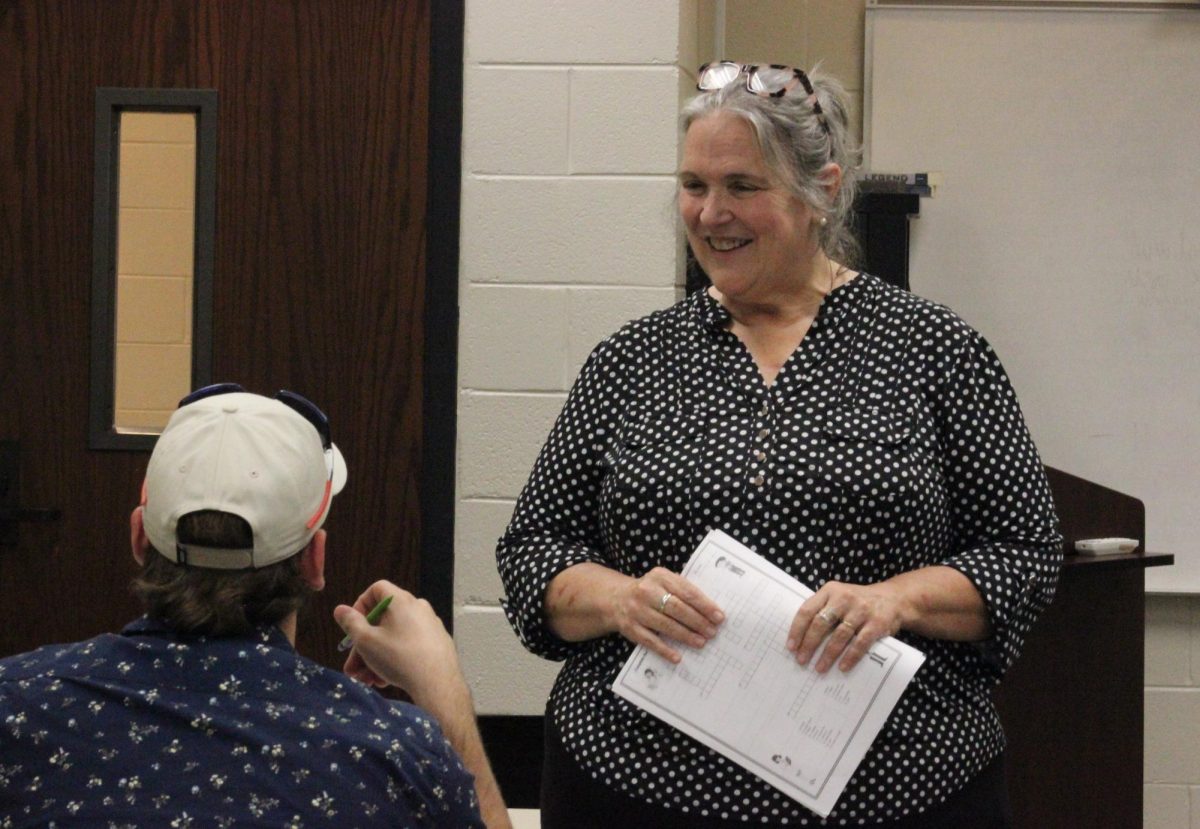
Claudia Polkbivins, who was also one of the first people to integrate into a white school, shared that she was deeply touched by DeBerry’s lecture.
“I was a senior when we integrated Hattiesburg High School; I cannot imagine being in first grade and going through that,” Polkbivins shared. “I can relate to the sadness of crying every day and wanting to shelter her mother from the trauma that she went through.”