














The U.S. Department of Education declared in late 2025 that nursing and many other degrees will no longer be considered professional, and that the amount of federal loans graduate students will be able to take out will be reduced.
The Grad Plus program, which allows graduate students to borrow up to their full cost of attendance, will be eliminated. All lifetime loans have a limit of about $200,000. According to the American Nurses Association, “This will severely restrict access to critical funding for graduate nursing education, undermining efforts to grow and sustain the nursing workforce.”
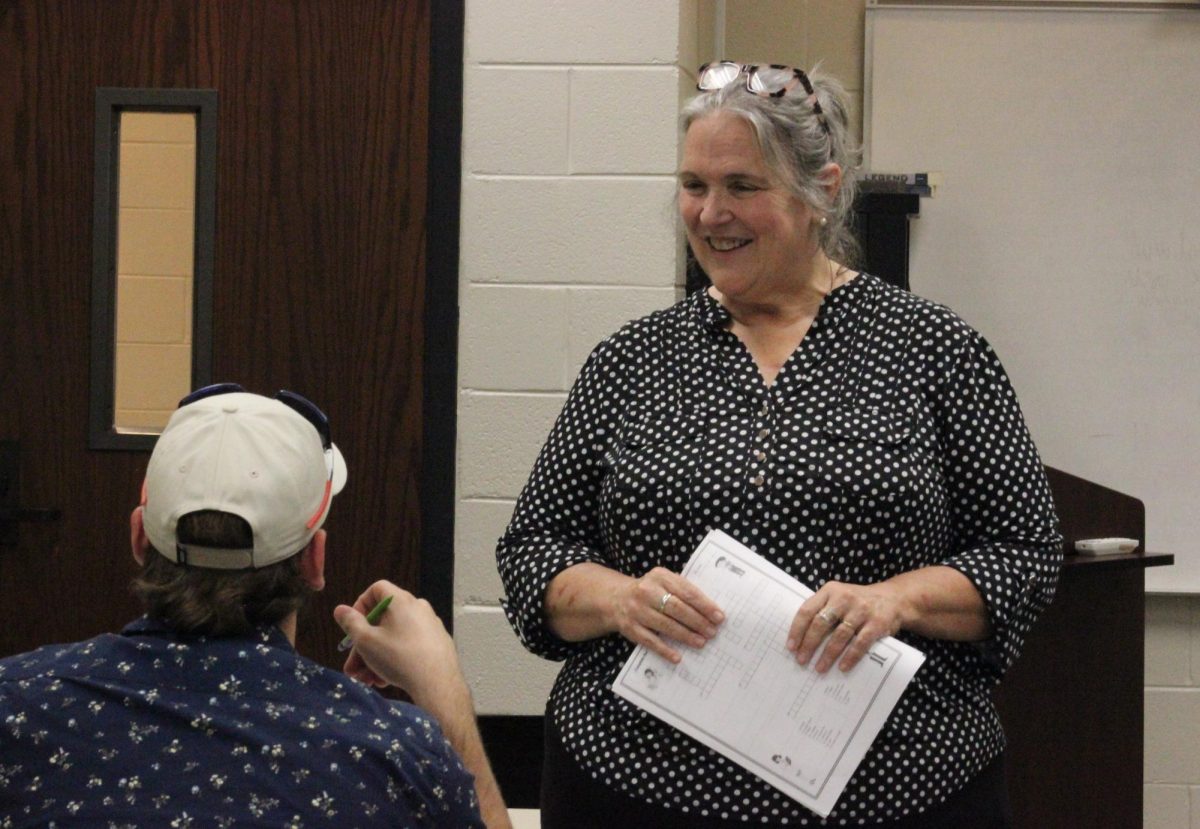
Dr. Charleen McNeill, the dean of the College of Nursing and Health Professions, agrees with her colleagues in the American Nurses Association. She says that this could negatively impact the current nursing shortage in the United States and limit help from reaching marginalized and small towns.
“We already have to turn potential nurses away from nursing school because we don’t have enough faculty,” said McNeill.
She explained that faculty staff need advanced degrees and that these “come at a significant cost to the student, and that will limit the number of people that want to go into education.”
“It’ll also limit the number of people available to provide care, and that will disadvantage populations, particularly in rural and underserved communities, where there is frequently a shortage of health care providers,” McNeill says. “Nurse practitioners fulfill an important role in these areas.”
Junior nursing major Lilah Pittman explains how, as a first-generation college student, this makes her worry about her future in the nursing profession.
“It’s already hard as it is now as an undergraduate being first generation, like I’m depending on my parents and my grandparents, and even if I can get any type of loans to help me get through undergrad, so I can only imagine how this would be for grad school,” Pittman expressed.
She says the only thing keeping her in the major is the research she has done about the healthcare system.
“I’ve done a lot of research about the disparities within the healthcare system, and this was specifically keeping me going because I know a lot of things need to be changed right now in our system,” Pittman said.
With graduate loans limited by this bill, she is worried about her future in the field and whether she will be able to pursue graduate school.
“It’s kind of like a scary feeling because you never know how the future is going to go. I want to go to grad school, but I already have loans from undergrad, so I don’t want to go into grad school and get even more loans, which is going to take me longer to pay off because it’s already hard as it is now, as just a regular student,” she said.
The U.S. Department of Education says that “placing a cap on loans will push the remaining graduate nursing programs to reduce their program costs, ensuring that nurses will not be saddled with unmanageable student loan debt.”
Many other degrees under Medicine (M.D.), Dentistry (D.D.S./D.M.D.), Law (L.L.B./J.D.), and many other programs that have higher costs will be capped at a $ 200,000 borrowing limit, while other graduate or doctoral students will be capped at $100,000.
The Department of Education says this is to “help drive down the cost of graduate programs and reduce the debt students have to take out.”