














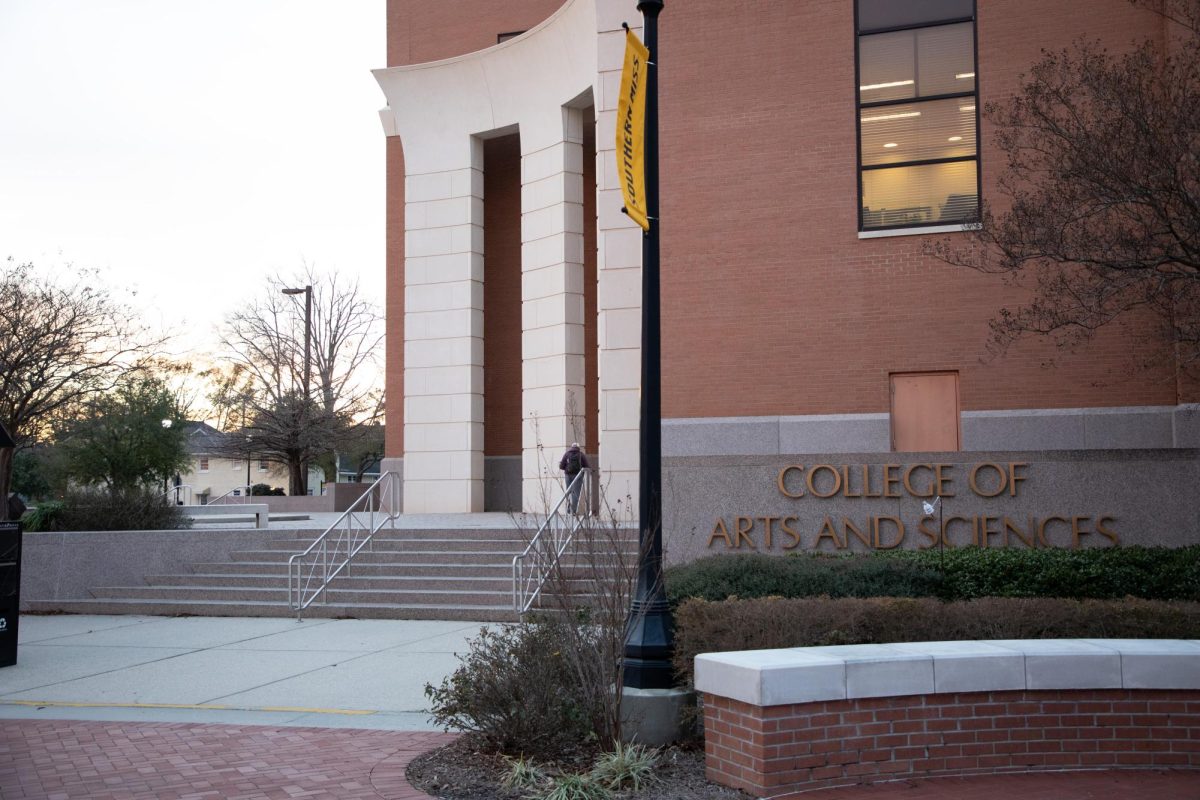
Mississippi lawmakers are considering a change to the state’s higher education funding formula that would tie university budgets to student outcomes, including job placement and income.
Supporters say the approach could help align programs with workforce needs, but some students worry it could limit resources for smaller programs, including majors in the social sciences and arts.
Junior anthropology student, Katherine Daleke, worries that if funding for anthropology and other social science majors become scarce, the loss would be more than just a few programs.
“When we students enter the workforce, we take on the responsibilities of leading our nation in research and understanding,” she said.
“Knowing our past and where we came from is very important,” Daleke said. “I think knowing things about how we've changed as a society over time and as a culture over time is valuable so that we can learn things about ourselves and do better and kind of grow.”
Daleke worries the resulting cuts will obstruct her chances at graduate school and her ability to pursue advanced anthropology studies.
"I've been told by my professors that it's going to be harder for me to get into master's school because of things that are going on right now with university funding," Daleke said. “It's proposals like this that make it harder for people like me to go to master's school."
Daleke said many students rely on their departments for research funding. Without money, she said, departments are unable to help, leaving students on their own.
"I know some students already who are having to fund their own research,” she said.
Daleke said those students often try to keep costs down, focusing on projects closer to home rather than traveling out of state.
"I'm not having that issue right now, because I'm not having to conduct my research in the field or anything,” Daleke said. “But three or four years from now, when I'm in master's school, that could very well pose a huge problem for me and make it hard to actually do what I want to do and be able to get my research out there."
While Daleke worries about the cost of research in the sciences, theater student Mary Margaret Duggan feels scared watching theater programs shutter nationwide from funding shortfalls — like the University of the Arts in Philadelphia.
“This is leaving people, who have taken three years of theater education, now not knowing what to do,” Duggan said. “Now, there's all these people that have spent years in this education platform, in their master's, in their graduate, in their undergraduate programs that don't have a place to be.”
That uncertainty often comes with financial strain. As more institutions defund the arts, Duggan added, students in specialized programs will face costly transfers. Some, once on a full scholarship, must choose between taking on debt or leaving their degree unfinished.
Still, Duggan remains committed to her craft — and to resisting the systematic pressure to become, as she put it, a “capitalist machine.”
“I think the reason why people are taking away funding from theater is because they want you to become this capitalist machine that works and works and only thinks about working and not about entertainment or fun or how to be introspective, how to learn,” Duggan said. “I think they don't want you to be a human being — they don't want you to have feelings.”
Duggan believes that theater threatens that system by asking people to see beyond statistics.
“Now theater and literature are showing people what's going on now and how this is affecting human beings, not numbers,” she said.
Duggan contrasted that human focus with the detached tone of online discourse.
“I think a lot of times we go, and we look online, we see numbers. Theater doesn't show you numbers,” she said. “They connect you to these statistics, and I think people don't want that —They don't want people to think that they're more than work.”